
Knowledge plays a part in everything we do. It can help you make better decisions, take better care of your agarwood plantation and much more.
Benjamin Franklin once said, “An investment in knowledge pays the best interest.” He knew the value of constantly becoming more knowledgeable. You have to keep improving yourself on a daily basis. You have to keep acquiring knowledge and improving your skills. “Once you stop learning, you start dying.”
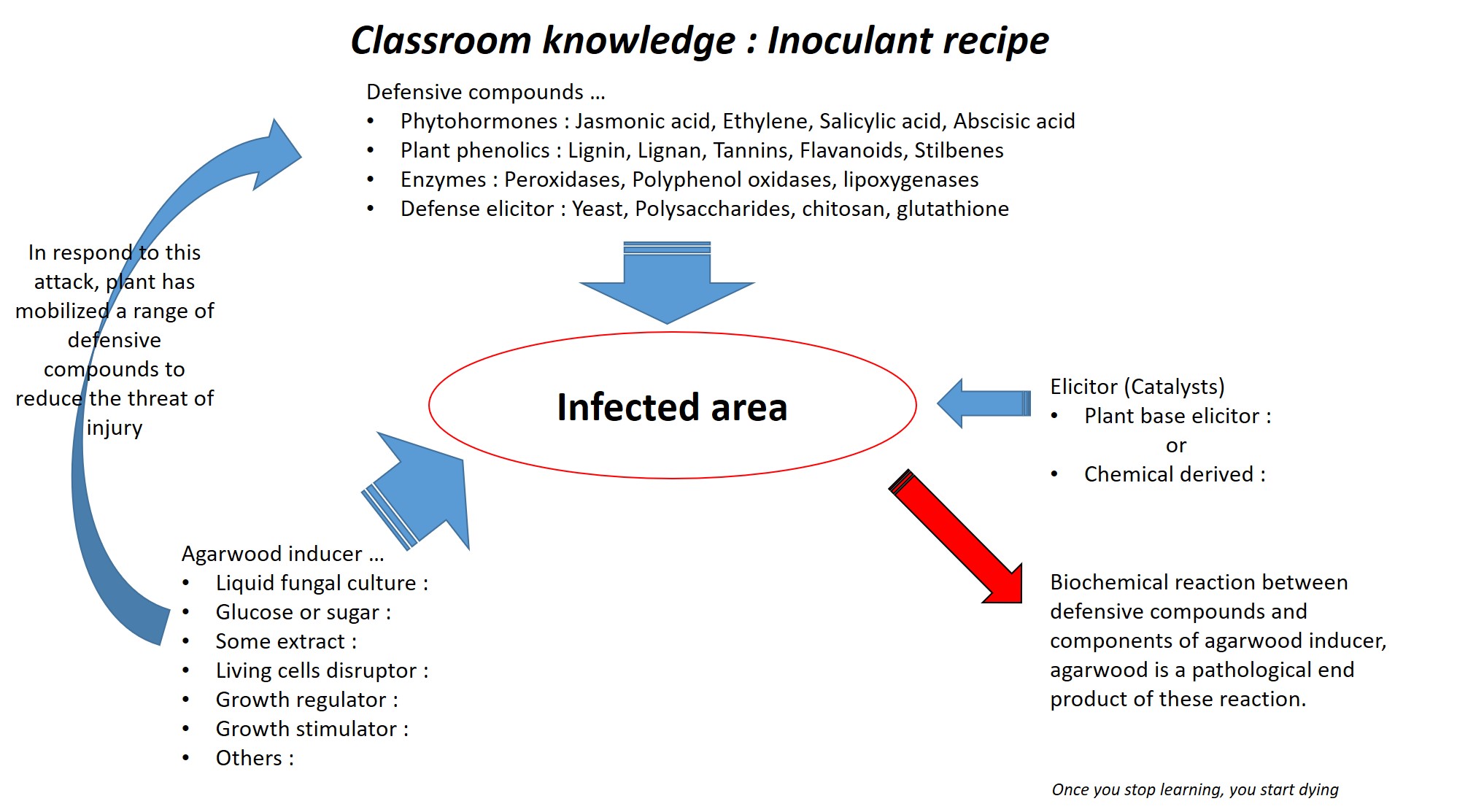
The agarwood causal agent could be divided into chemical, physical, and biological agents. Mechanical injury could be considered as physical inducer of agarwood formation, as the induction of some chemicals, such methyl jasmonate is considered as chemical inducer. Fungi are considered as one of the biological agents that induce agarwood formation. This biological agent is more preferred since its formation development is considered progressive. Logically, any so called microbial-based inoculant must come in 3 parts (bottles). Namely,
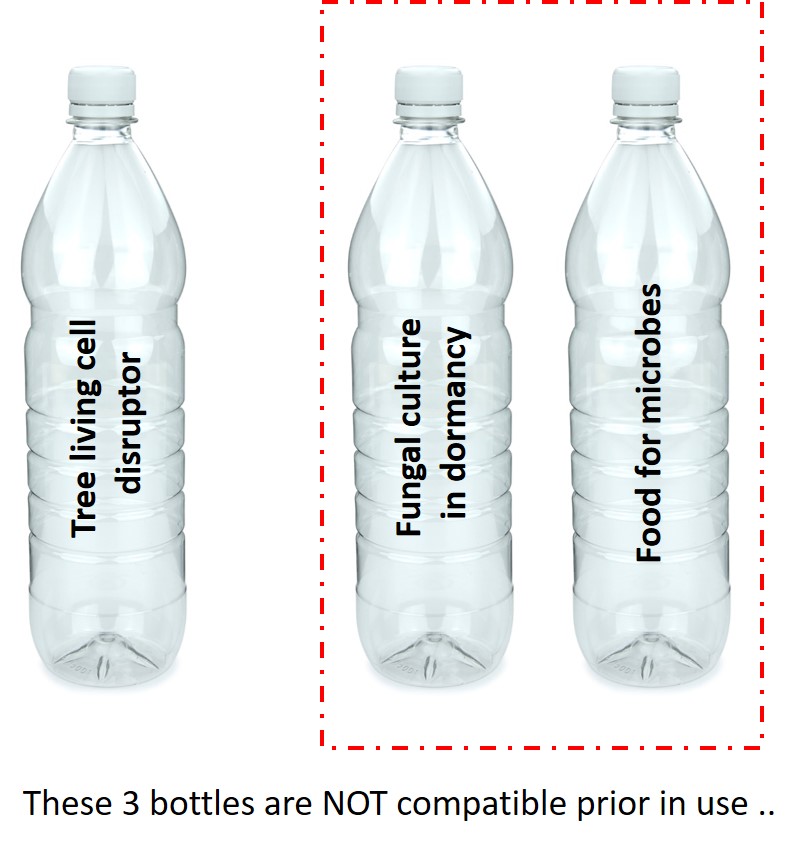
- Liquid fungal culture
- Food for microbes
- Disruptors for tree living cells
Why ? Reasons being two…
- Fungal thrives at different environment which is NOT a norm to disruptors at its designated concentration.
- Microbial dormancy … food to activate microbes MUST be separated from microbes while NOT in use.
Application ….
- Inject the disruptors to the tree first. Let the disruptors fully absorbed, then mix the Liquid fungal culture + Food for microbes, inject the solution into the tree about 5cm above the 1st treatment.
- If U properly culture the microbes, “RECOVERY” process will be minimized when perfect condition is matched.
- The inoculation process ideally requires TWICE the work load, that’s the way… no short cut ( if u are stressing on microbial-based inoculant )
What is “RECOVERY” ?? Pls search in myblog, u should be able to find the explanation.
What we see in the market, they are mixed in one bottle. Pathologically speaking, how can the microbes thrive? It always ends up with “RECOVERY” after 24months. This is because the microbes are losing their strength in the single-bottle product… how do expect a saltwater fish to survive in fresh water environment??
… U can use the above-mentioned knowledge to produce your own. If you would like to explore in backyard inoculant production, pls have some reading “here“… and ring me “here“.


 Gaharu 沉香 Agarwood
Very informative and educational especially when am wanting to begin agarwood farming.
I have been trying grow Aquilaria Crassna
For 2 summers now and haven’t had luck yet.
Can you please tell me what month is best time
To visit and pick up seeds from your farm?
My friend in Malaysia can purchase for me.
Thank you!
Geographical location in Hawaii is fine to grow Aquilaria .. as long as it is not freezing cold, not colder than 8 degree C in winter. Or, the seeds with you were NOT fresh.
Hello Sir have a nice day. Can i buy you a freash seeds of mallacensis?
Whatsapp …. +60123231161
Have you tried growing you own innoculant? I have pure cultures of Fusarium and Penecilin, but haven’t innoculated trees yet.
Have you tested any other ‘damage’ method? Yes I know fire / hot metal rod / drill holes….etc.
Do you agree that the generation of Aloes begins at the heartwood-sapwood boundary? Therefore if we could develop a method to expose as much heartwood to the innoculant as possible, we should have greater results, don’t you think?
hi sir using bamboo sticks it will effect The agarwood qualitys?
why not using same agar tree wood sticks for inoculation, it’s better’ for using same tree wood pls can tell me sir